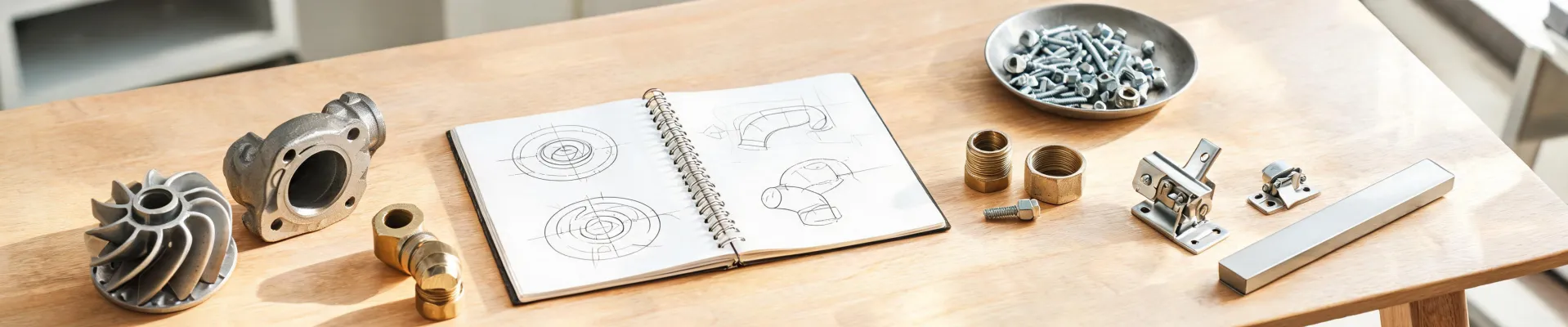
Friday, 2:40 PM. Property manager on the line. The sump pump at a garden-style apartment is throwing water around its outlet fitting, and the tenant below is a wedding photographer with a Saturday booking. The cracked adapter is a 3/4" PVC threaded piece. Twenty-minute repair—if the pump were newer and the old fitting less stubborn.
That call stretched into the evening. And it taught me more about buying parts than any supplier catalog did.
In my role coordinating maintenance for a property management company, I've handled 200+ rush repairs over the last eight years, including same-day turnarounds for tenants whose businesses depended on it. Calls like that are rarely about the failed part itself. They're about how the replacement part was chosen. Actually, I should be more specific: they're about how the cost of that replacement was evaluated.
The Real Problem Isn't the Part—It's How We Compare Parts
When a screw strips or a fitting cracks, the natural move is to find the cheapest replacement. That move is exactly wrong, and it's the reason the same repair keeps showing up on your invoice.
Here's something parts suppliers won't tell you: unit price is the smallest number on the real invoice. The real invoice includes your drive time, your labor, the second trip when the cheap part fails, and whatever gets damaged in between. I call it total repair cost, and in this line of work it's the only number that matters.
Say you buy a 1/2-inch brass adapter for $3.50 from an online discount seller. The threads are okay-ish but cut sloppy. You spend 15 extra minutes coaxing it to seat. It works, so you forget about it. Three months later it's weeping behind the drywall, and now you're explaining to a property owner why their floor is stained. The Everbilt version at Home Depot cost $7 and threaded clean on the first try. Which one was cheaper?
That's not hypothetical. I've lived the $3.50 version twice. Ballpark, a callback costs us $185 before parts, and that's if nothing gets damaged. If saving $4 buys a 10% chance of a callback, that's a red flag, not a bargain.
What the Everbilt Logo Does (and Doesn't) Tell You
Everbilt is Home Depot's house brand for hardware. It's the name and logo you'll find on everything from fasteners and hinges to brackets, valves, and pipe fittings. What most people don't realize is that the logo isn't a badge of premium quality. It's a badge of predictability.
When I see the Everbilt logo on a package, I expect the thread pitch to match the next package. I expect the screw head to be what the label says—Phillips, not some proprietary hybrid. I expect the finish to be consistent. That predictability is worth real money on a job site.
What the logo doesn't mean is a durability guarantee. Stay away from anyone who tells you a product "never rusts" or "fits everything." Everbilt doesn't claim that, and you shouldn't believe it from anyone else. The logo just means the spec on the label is the spec in the box. (As of early 2026, at least. Packaging changes, so read it every time.)
I'm not a materials engineer, so I can't speak to metallurgy. What I can tell you from a maintenance perspective is that material and grade matter more than branding. A zinc-plated drywall screw and a stainless machine screw are both "Everbilt screws." They are not the same product. The logo is the start of reading the label, not the end.
The Price of Getting It Wrong
I've watched the same math problem play out in three recurring emergency scenarios. Each looked like bad luck at first. Each was actually a part-selection problem that had been waiting to happen.
The Truck Bed Tool Box That Cost a Contractor His Drills
A contractor friend lost a set of cordless drills ($400-ish, bought over five years) when his truck bed tool box broke loose on an interstate ramp. The box had been mounted with drywall screws that were "temporary" for two years. The holes were oversized, the box shifted, and the threads finally let go.
The right hardware for a truck bed tool box: carriage bolts or flange bolts with lock washers, or a mounting bracket rated for the box's weight. Everbilt has bins of exactly this stuff. The right parts cost maybe $12. The drills cost $400. The tow truck and the missed job site were extra.
The Electric Lawn Mower Parts Diagram Trap
I'm not a small-engine mechanic, so when a tenant's electric mower started vibrating hard enough to walk itself sideways, I did what any non-mechanic does: I pulled up the electric lawn mower parts diagram on my phone.
The diagram specified an M8 x 1.25 blade bolt, property class 8.8. The box of "assorted metric bolts" in my van had an M8 x 1.0. Close enough, right? No. It cross-threaded halfway in and chewed up the blade boss. A 20-minute blade swap became a $90 replacement part and a very honest apology.
Once you've paid for that mistake, matching the diagram becomes a no-brainer. Read the thread pitch, the grade, and the length, then find the exact fastener in the Everbilt fastener aisle. The extra five minutes of reading saves an extra trip every time.
How to Loosen a Pipe Fitting When the Clock Is Running
Search "how to loosen a pipe fitting" and you'll get a million results, because it's genuinely annoying—especially when the fitting is seized and what's behind it is about to flood. The version I actually use:
Heat the hub (the female side), never the valve. Use two wrenches: one on the fitting you're removing, one backing up the adjacent fitting so you don't twist a pipe out of the wall. For threaded metal, penetrating oil plus a few sharp taps beats brute force. For PVC, stop—heat is not your friend. I watched a guy hit a plastic fitting with a torch once. It ended with a fire hazard and a flood. We paid $800 extra in emergency supplies that night to save a $12,000 property damage claim.
When you get the old one out, replacement is where TCO thinking pays. NPT is the standard for US threaded pipe, and a matching brass fitting—like a brass Everbilt adapter or nipple—costs more up front than galvanized but has been way more forgiving on removal later. I'll admit I don't have laboratory numbers for that. But 200+ repairs is enough field data for me.
What to Do When You Can't Afford a Second Trip
In March 2024, a warehouse manager called at 4 PM needing a 1-inch gate valve replaced before a next-morning inspection. The OEM replacement was four days out. The Everbilt gate valve at the local Home Depot cost $27—less than half the OEM quote—and we had it installed by 7 PM. Missing that inspection would have triggered a $50,000 penalty clause in his lease.
That's the kind of call that shapes habits. Our company policy now staggers critical replacement parts at each property ahead of time. It's a 48-hour buffer we adopted because "we'll order it when it breaks" is not a plan.
For the emergencies that hit anyway, the short version:
- Read the label like a legal document. Material, grade, thread type, length. The Everbilt logo is the beginning of that, not the substitute for it.
- Match the environment. Wet or outdoor service: stainless or brass. Interior and dry: zinc is usually fine.
- Use the right tip size. A stripped screw head is usually a tool problem, not a screw problem.
- When in doubt, buy the better spec, not the lower price. The $7 fitting beats the $3.50 fitting plus a callback.
Bottom Line
The cheapest replacement part in the store is rarely the cheapest part in the job. Total repair cost—your time, your fuel, the damaged drywall, the missed deadline—is what actually matters.
Everbilt is a solid, consistent workhorse. But no brand rescues a bad spec. Read the label, match the application, and treat the logo as step one, not the final answer. That's what makes a repair last.

Maren Jorgensen
Maren Jorgensen is an independent hand tool and torque applications analyst covering wrenches, pliers, screwdrivers, hammers, sockets, ratchets, hex keys, and tool sets. She applies ISO 6789-1 torque-tool conformance principles while examining jaw capacity, leverage, fastener engagement, torque range, accuracy, handle geometry, and material hardness. Her practical guides help tradespeople and procurement teams select suitable tools, plan controlled tightening, and compare durability without relying on brand reputation alone.