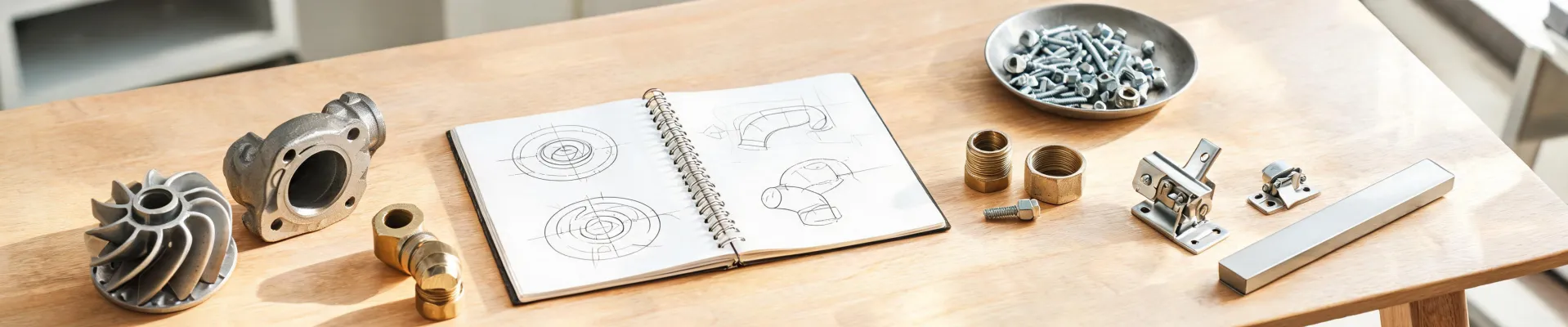
There's no single 'emergency kit' that fits every job
I'm a facilities maintenance lead at a commercial property management company. I've handled 600+ emergency repair calls in 11 years, including same-day turnarounds for retail and clinic clients. When I first started, I assumed emergency work meant buying the most expensive part on the shelf. Ten years later, I realized emergencies are usually won by matching, not spending.
So if you're searching for everbilt replacement parts or trying to answer what size impact wrench is best for lug nuts, the honest answer is: it depends on which emergency you're in. I split these calls into three buckets: water where it shouldn't be, equipment that won't move, and parts you can't identify. Each one has a different buying logic.
Scenario A: Water is where it shouldn't be
This is the most common emergency I dispatch. A sump pit is filling, a toilet is running constantly, or a supply line is leaking. You need a part that fits now, not a perfect long-term upgrade.
If the sump pit is filling
For a small basin with moderate lift, an Everbilt sump pump 1/3 hp is often what I reach for first. It's a common size for residential and light commercial pits. But here's the catch: horsepower alone doesn't tell you if it will work. You have to check the discharge size, the basin diameter, and the vertical lift. According to Home Depot product listings for Everbilt (homedepot.com, 2026), those specs vary by model, so verify before you buy.
I learned this the hard way. In March 2024, a retail client called at 6:40 a.m. with two inches of water in a stockroom. Normal turnaround for a maintenance tech was four hours. I grabbed a 1/3 hp pump because the old one looked similar. It wasn't. The discharge was 1-1/4 inches, but the existing pipe was 1-1/2 inches. We paid a $120 rush fee for a coupler and adapter kit, plus another $40 in gas running between two stores. The job got done by 9:15 a.m. (thankfully), but the client's alternative was closing the stockroom for the day. That's when I started carrying calipers and a tape measure in my truck.
If the toilet won't stop running
An Everbilt flush valve kit can be a solid fix for a running toilet, but only if the tank height and overflow tube match. I once said 'standard flush valve' to a junior tech. He heard 'universal.' Result: the kit didn't seal, and we made two extra trips. Now I say: 'Bring the old flapper and overflow tube to the aisle. Compare them side by side.'
Then again, if the toilet is cracked or the flange is broken, a flush valve kit won't save you. That's a different scenario. Don't force a parts fix onto a structural problem.
Scenario B: Equipment or vehicle won't move
This is where tool selection gets personal. You're not replacing a part; you're trying to get a truck, trailer, or small engine back online.
Serpentine belt failure
A serpentine belt tool set is one of those purchases you don't appreciate until you're in a parking lot with 20 minutes of daylight left. The set gives you the leverage and low-profile sockets to release the tensioner without pulling the fan shroud or skinning your knuckles. I used to think a breaker bar and a prayer would work. It did once. The second time, I bent the tensioner arm and turned a 30-minute job into a 3-hour job.
If you're buying for a crew, get a set with multiple socket sizes and a locking pin. If you're buying for one vehicle, check the tensioner type first. Some use a square drive; others need a Torx or hex bit. The set that fits a 2010 Ford won't necessarily fit a 2018 Chevy.
Lug nuts and impact wrenches
For what size impact wrench is best for lug nuts, most light trucks and SUVs use a 1/2-inch drive impact wrench. That's the practical answer. A 3/8-inch drive is usually too weak for rusty lug nuts, and a 1-inch drive is overkill for passenger vehicles. But the size of the wrench is only half the story. You also need the right socket and a torque wrench for final tightening.
According to the Car Care Council (carcare.org), lug nuts should be tightened to the manufacturer's torque specification and re-torqued after about 50 miles. An impact wrench is for removal and snugging, not final torque. I've seen techs hammer a lug nut with a high-torque impact and over-stretch the stud. That's a comeback waiting to happen.
I went back and forth between a corded and cordless 1/2-inch impact for two weeks. Corded had more consistent power; cordless was easier in a parking lot. Ultimately, I chose cordless because the jobs were mobile, but I kept a corded backup in the shop. The decision wasn't about brand. It was about where the emergency happens.
Scenario C: You can't identify the part
This is the quiet emergency. A chainsaw won't start, a drawer slide is broken, or a pump has no visible model number. You have a chainsaw logo on the side cover and a customer waiting.
The rookie move is to search by logo alone. I did that in 2022. I ordered a fuel cap for a chainsaw based on the logo and the color. Wrong thread pitch. The saw sat for another day. Now I take three photos: the logo, the model plate, and the part itself next to a ruler. According to the Outdoor Power Equipment Institute (OPEI), model and serial numbers are the best way to identify replacement parts. The logo tells you the brand family, not the exact part.
For everbilt hardware, the same rule applies. Everbilt is a Home Depot brand, and the packaging often has a model or SKU. Bring the old hinge, drawer slide, or valve to the store if you can. If you can't, measure the hole spacing, the screw size, and the load rating. A photo of the logo is not a measurement.
Honestly, this is where the industry has changed for the better. Five years ago, I kept a shelf of mystery parts because I couldn't look them up fast. Now I can search by model number, check local store inventory, and do same-day pickup. The fundamentals haven't changed—measure, match, verify—but the execution is much faster.
How to tell which scenario you're in
Ask yourself three questions before you buy anything:
- Is there active water or a safety risk? If yes, you're in Scenario A. Stop the water or power first, then match the part.
- Is a vehicle or crew blocked? If yes, you're in Scenario B. Prioritize removal tools and torque specs.
- Do you have the old part or a model number? If no, you're in Scenario C. Take photos and measurements before ordering.
If you're still unsure, call the manufacturer's support line or a local supply house. I've paid $75 for a phone consultation that saved a $600 wrong order. That's a pretty good trade.
Bottom line
Emergency repairs don't reward brand loyalty or guesswork. They reward fit, torque, and timing. Keep an Everbilt sump pump 1/3 hp on your shortlist for small pits, but verify discharge and lift. Keep an Everbilt flush valve kit for running toilets, but match the tank. Carry a serpentine belt tool set if you work on engines. Answer what size impact wrench is best for lug nuts with '1/2-inch drive for most light trucks, plus a torque wrench.' And when you see a chainsaw logo, don't buy by logo—buy by model number.
That's basically the whole game. Note to self: keep the calipers in the truck, not the shop.

Maren Jorgensen
Maren Jorgensen is an independent hand tool and torque applications analyst covering wrenches, pliers, screwdrivers, hammers, sockets, ratchets, hex keys, and tool sets. She applies ISO 6789-1 torque-tool conformance principles while examining jaw capacity, leverage, fastener engagement, torque range, accuracy, handle geometry, and material hardness. Her practical guides help tradespeople and procurement teams select suitable tools, plan controlled tightening, and compare durability without relying on brand reputation alone.