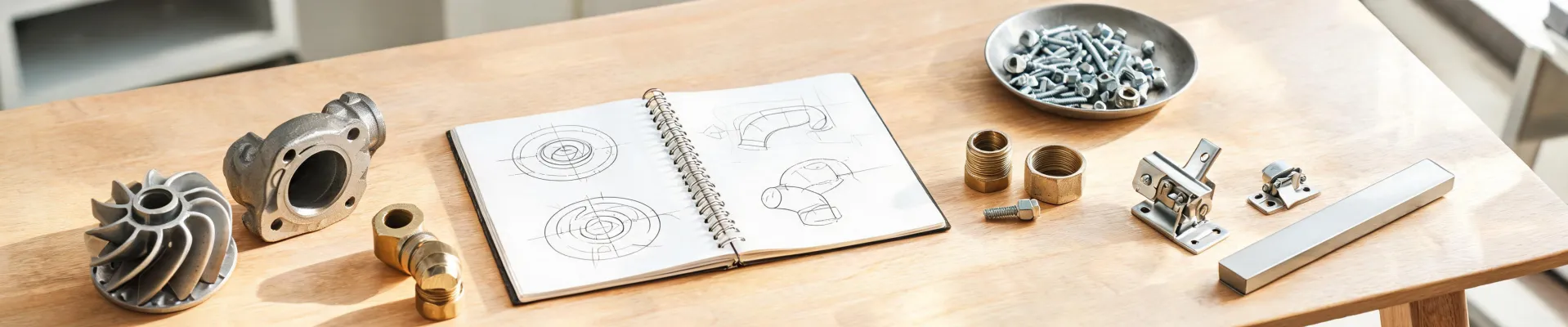
Most emergency pump calls are not pump failures. They're planning failures.
That's a strong take, I know. But after 14 years of running service calls—and a whole lot of 6 a.m. text messages from clients who just found a wet basement—I'm sticking with it.
The cheapest fix is the one you can do fast, with a part you can actually find. That's why I've become a genuine Everbilt fan. Not because Everbilt makes the flashiest hardware on the shelf. Because in a pinch, Everbilt replacement parts are predictable, the manuals are searchable, and the pieces usually fit—as long as you do your homework. That last part, the homework, is what I want to talk about.
Stop Guessing. Start With the Everbilt Pump Replacement Parts List PDF
Here's the thing: when a sump pump stops working, most people just grab a random float switch or impeller and hope. I don't mean to sound harsh, but that's how a 25-minute repair turns into a $200 service call.
What most people don't realize is that the pump's model number is the whole game. Before you buy anything, find the data plate on the pump—usually on the motor housing—and write it down. Then look up the Everbilt pump replacement parts list PDF for that exact model. The manual has an exploded diagram that shows every spring, clip, and O-ring. It will tell you the part number and what it's called. This one step alone has saved me more time than any tool in my truck.
In March 2024, a property manager called me at 7:12 a.m. Water was already dripping through the ceiling below a utility room, and new tenants were scheduled to move in 36 hours later. The pump was a four-year-old Everbilt submersible, and the float switch was dead. The manager had tossed the manual and had no idea what switch to order. We spent two hours on the phone with customer service, digging through product pages, until I found a photo of the same model's parts breakdown from an old job in my phone. The replacement took 11 minutes. The 'finding out what to order' part took 120.
That's not an Everbilt problem. That's a 'nobody keeps the manual' problem. And it's fixable: bookmark that PDF, screenshot the parts diagram, take a photo of the spec plate. If I can get a client to text me a model number on the first call, I can often have the right part in hand that same day. You can usually download the PDF from the Home Depot product page under Manuals & Downloads, or get the Everbilt customer service team to email it to you.
Everbilt Heavy Duty Support Bracket Reviews: Yes, the Bracket Matters
Let me get this out of the way: Everbilt heavy duty support bracket reviews are rarely the thing that makes a contractor's heart race. It's a metal L-bracket. It's not a shiny upgrade or a high-tech gadget. But it might be the least glamorous part that keeps a pump setup from tearing itself apart.
Here's something vendors won't tell you: a surprising number of sump pump 'failures' are actually vibration and mount failures. A pump that isn't supported correctly will vibrate over time, the discharge pipe will sag, and the pump will cycle off and on more often. That extra wear destroys float switches and burns out motors faster than a long run ever will.
I've installed the Everbilt heavy duty support bracket on maybe 25 or 30 jobs over the last two years, and I've never had a callback on one. I'm not saying it's magical—a bracket is a bracket if the load is small. And I don't want to be the guy who says 'buy this and never worry again,' because that's not how hardware works. But if you're mounting a sump pump, a backup pump, or any pump that vibrates, a properly rated support bracket is a no-brainer.
I once watched a homeowner grab the cheapest bracket he could find because 'it's just a bracket.' Three weeks later, the pump was cycling at all hours and the float switch was fried. The service call cost more than five decent brackets. That's the thing about cheaping out on a support piece: you don't notice the problem until it becomes a whole different problem.
One warning: the bracket has to match your pump's discharge configuration. Check the diameter and the pipe material before you buy. In other words, the bracket isn't 'one size fits all,' and I'd be lying if I said otherwise.
Why a Duplex Sump Pump System Is Worth the Extra Spend
Here's the truth no one likes to say out loud: every pump I've ever installed will fail eventually. Every single one. That's not pessimism; that's physics. The difference between a flood and an inconvenience is usually how fast you can get a replacement running.
For clients who can't afford downtime—property managers, retail spaces, anyone who stores stuff in a basement—I push hard for a duplex sump pump system. That's two pumps set up together: a primary pump and a backup pump. When the primary dies, the backup kicks in. You get an alarm and a little time to fix the real issue instead of panicking.
I'm not 100% sure about every brand's setup, but most Everbilt pumps have simple wiring and common float switch sizes, which makes a duplex setup a lot easier than people expect. You're not building a rocket; you're installing a second pump and making sure the check valves are pointed the right way. An informed customer can usually understand the whole system after 10 minutes of honest explanation. That's the thing—I'd rather spend 10 minutes teaching a client how their pump system works than spend two hours after a flood trying to explain why it failed.
The emergency-repair side of this matters too. A duplex system gives you the cushion to order the right part instead of paying express shipping for the wrong one. If there's a rusty piece of pipe involved and you have to cut it out to make room for a second pump, you need an angle grinder you actually trust. That brings me to another thing I see all the time: helpers who don't know how to replace angle grinder blade without learning it on the job. It's a small thing, but small things add up when the clock is ticking.
Quick Field Note: How to Replace Angle Grinder Blade
Real talk: if you've never practiced this at home, do it before you need it. The short version: unplug the grinder, press the spindle lock, use the wrench to loosen the center nut, swap the blade, and tighten the nut back down. That's it. If you're not sure which way to spin the nut, check the manual before you break something. And if the blade spins by hand after you tighten it, it's not seated right—take it apart and start over.
Same goes for the floor. I've watched a guy hand-nail a plywood subfloor because nobody brought a wood floor nail gun. It took him twice as long, and his arm was done by lunch. A good flooring nailer doesn't just speed up new floors; it saves massive time when you're patching a subfloor after a water cleanup. It's probably not the first tool you think of in an emergency, but once you own one, you'll keep finding excuses to use it.
But Isn't Everbilt the 'Budget' Brand?
I hear that question a lot. People assume that because Everbilt is sold exclusively at Home Depot, it's the cheap option you chose when you couldn't buy the 'real thing.' I don't agree.
Is Everbilt the most durable pump brand on earth? I can't prove that, and I'm not about to claim it. But I can prove that good parts availability beats a slightly thicker housing. A premium pump with a proprietary float switch is a fancy paperweight if the part is backordered for ten days. Everbilt's parts are common enough that I can usually pick them up at a local store or order them with a realistic lead time.
I've also had to replace plenty of expensive pumps that failed for simple reasons—bad electrical connections, misaligned floats, stuck check valves. If you're going to be your own repair guy, knowing where to find the parts and how to swap them is worth more than the label on the pump.
Bottom Line: Prepare for the Day the Pump Quits
I'm not trying to sell you on a brand loyalty truck. I'm trying to sell you on preparation. Whether it's an Everbilt pump replacement parts list PDF tucked in your phone, a heavy duty support bracket that actually supports, or a duplex sump pump system that gives you breathing room, the goal is the same: make the emergency less dramatic.
That one client from March 2024? The tenants moved in on time. I replaced the float switch with an Everbilt part I picked up that afternoon, and the backup pump we installed later was the homeowner's idea, not mine. He got it. When you understand the system, you make better decisions—usually before the water hits the floor.
Take this all with a grain of salt. My experience is based on residential and small commercial jobs in the Midwest—maybe 300 emergency calls a year, mostly pumps and plumbing. If you're dealing with a massive industrial sewage setup, or a custom pump station with controls that look like a NASA console, don't assume these shortcuts apply. Check the specs, talk to an engineer, and keep your own parts list close.
But if you're like the rest of us, trying to keep a client calm and a basement dry with limited time and a normal toolbag? The Everbilt route is a solid first move. Period.

Maren Jorgensen
Maren Jorgensen is an independent hand tool and torque applications analyst covering wrenches, pliers, screwdrivers, hammers, sockets, ratchets, hex keys, and tool sets. She applies ISO 6789-1 torque-tool conformance principles while examining jaw capacity, leverage, fastener engagement, torque range, accuracy, handle geometry, and material hardness. Her practical guides help tradespeople and procurement teams select suitable tools, plan controlled tightening, and compare durability without relying on brand reputation alone.